How this started
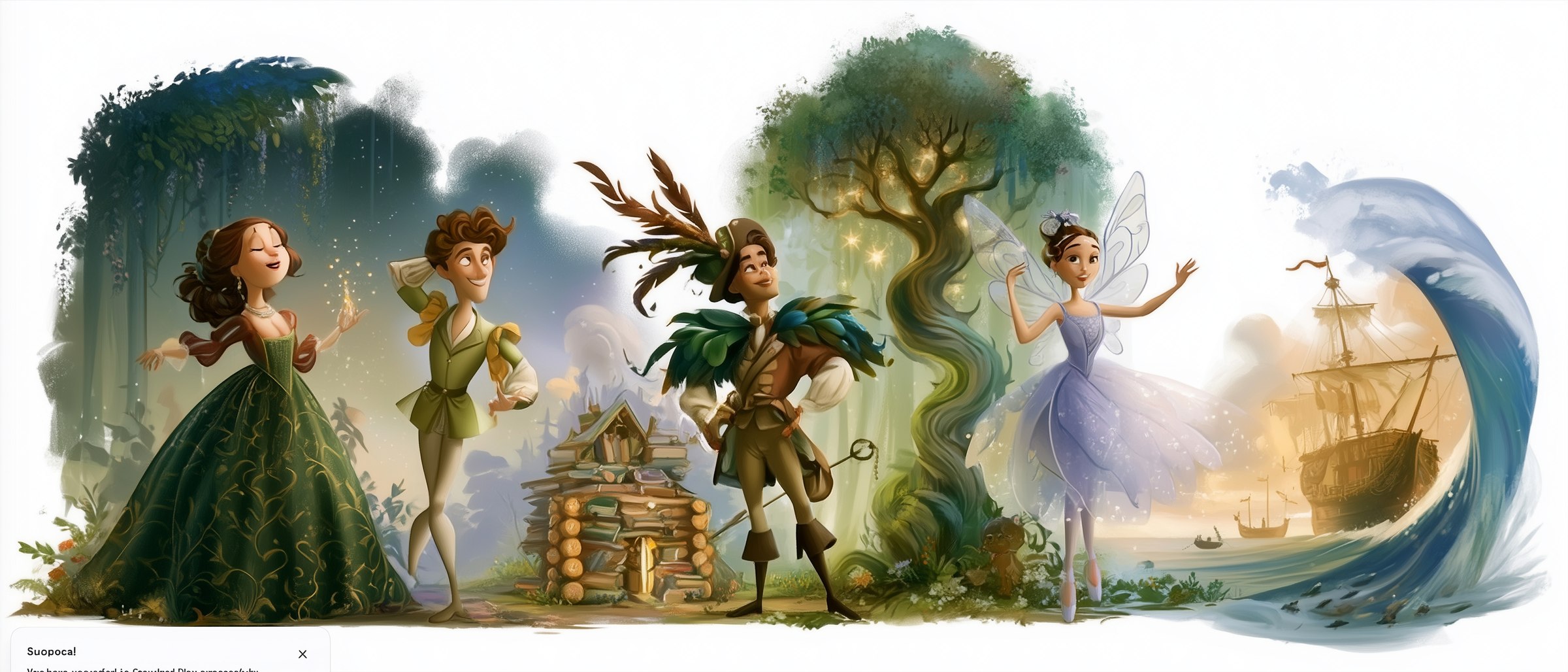
There are a number of classical music books for kids that my 3-year-old had summer 2026 (and still has), and each one linked rather short excerpts that he played over and over and over again, as toddlers are wont to do. I found that I started singing longer excerpts to expand the brief snatches of sound, and he had the attention span for longer phrases, even given his love for button mashing. And often the books would leave out my favorite parts, and then we'd all have a lively discussion about what the best bits actually were. So first I made a replacement Magic Flute for him here. But then my husband immediately asked for a Lohengrin that we could listen to and actually be able to tell the story. And then it seemed obvious to do my favorite piece in the whole wide world, Scheherazade.
So now I have a growing library of music-based storybooks that our little family loves and listens to over and over. I'm taking delight in opening the door for our son to something wonderful that we love. There are many other things that are wonderful in the world, and we'll explore those together, too. But I've found a way to tell stories and bask in music. And I'm getting a great deal out of it: rereading stories I haven't visited in years, matching up plot points to musical gestures like a choreographer, learning period clothing terminology, and creating the AI art.
Mozart
The Magic Flute
The Magic Flute is often seen as an entry point for folks unfamiliar with opera into the genre, but I've never really been a fan. Papageno and Papagena make the opera, and we mostly make it kid-appropriate, and, well, even modern-adult-appropriate by leaving out the objectionable parts, like the wise Sarastro remonstrating with the foolish Tamino for believing anything a woman said. The central theme of the opera can be summarized by 'bros before hoes'. But it's accessible in that there are several separable pieces with basically one idea and voice/group each, a trio of children or sopranos, a trio of the queen's ladies, the big famous Queen of the Night aria, some weird animal stuff, and a happy ending. So it's a good place to learn the basics of opera.
Open the book →Wagner
Lohengrin
Okay, I know I chopped up Lohengrin and put it all out of order, and some folks will object. My husband is a professional trombone player, and he fell in love with Wagner's music before he knew the story. I came to it from the story side and couldn't stand it. A real hero doesn't show up to rescue the damsel in distress and ask "by the way, if I do save you, will you marry me, and oh also never ask me my name or anything about my past?" Because the answer to that is really "um, I guess I have no choice". So this Lohengrin remix is not so much about making it kid friendly as it is about making it something that I can stand to listen to. It's actually a pretty good story if you take the whole marriage and forbidden question thing out of it (curiosity is one of the attributes I most highly prize in people, adults or children, so I'm not a fan of forbidden questions). Yes, I've essentially made Lohengrin into Jack Reacher, but actually, Jack Reacher makes a great Knight of the Holy Grail, if you cross your eyes a little bit and look at him from a distance. I know I'm not alone in disliking the plot; if you read Wagner's notes on it, you can tell his friends and advisors were trying very hard to talk him out of his efforts to impose an awful story from Greek mythology on the Lohengrin story.
If you've gotten this far into my very unacademic rant, you're no doubt thinking: you can't take the marriage out, the most famous piece from the whole opera is 'Here Comes the Bride'. Fair. That was a challenge. But honestly, that piece was never a good idea for a processional, given the words and context, and no one uses it anymore. And Gottfried deserves a celebratory homecoming. I regret that I don't have a symphony orchestra and opera company at hand to change the words.
And let me get back to the music. The music is amazing. The choruses and tutti pieces are breathtaking, literally and figuratively. The finales to Acts I and II are soaring (and they make rather natural happy endings, they were just mistakenly not placed at the end). As much as I want to rant about the story, I want to rave about the music. I put the prelude to Act III in as the duel music, because I couldn't possibly leave it out and it needed a plot point, but the actual duel music is great, too. Elsa's Procession to the Cathedral is something I listen to over and over again, staring at the ceiling and thinking big thoughts. There was just too much great music to get it all in. And that's why people do Wagner productions.
Open the book →Rimsky-Korsakov
Scheherazade
It's impossible to overstate how much I love this piece, how close to the core of my being it sits. When I was in high school, I kept my Scheherazade record (yes, a record, at a time that none of my friends had records) with side B up sitting on the player in my room, and I listened to movements 3 and 4 every night to go to sleep for over 3 years. Toddlers are not the only ones to do things over and over. The third movement reminded me of all the beauty in the world, and the fourth one built all of my emotions at once into one wild, whirling storm, waves crashing, wind howling, and then released them all at once. It filled me up and emptied me out and brought me to peace. This symphonic suite based on the towering storytelling tradition of the Arabian Nights, the whole purpose of which is to soothe the raging pain and vindictiveness of a broken-hearted sultan, sang me to sleep each night. As the needle automatically lifted off of the disc, the arm swung home and settled into its holder, and the turntable stopped with a soft click, I dropped into a contented sleep.
So after I made the Magic Flute and Lohengrin books for my son and husband, the first piece I did for me was Scheherazade. I made it continuous play and combed back through the Arabian Nights for the right stories. Clearly Sinbad the Sailor was involved, but which voyage(s)? There were three Kalendar Princes, each with several stories, but it was Agib that toppled the Bronze Horseman. We don't know who the prince and princess were that Rimsky-Korsakov was thinking of, but Badoura was my favorite, a woman with agency, so I paired her with Agib. I took some liberties and bent plotlines to fit, but Sinbad, Agib, Badoura, the underground river to Serendib, the Bronze Horseman, and the magnetic mountain are all in the source material. I also figure Badoura would do Agib a lot of good much later in his story when he becomes a Kalendar. And along the way I discovered with delight some history that I added to the stories:
- Polonnaruwa, an ancient stone city in Sri Lanka on which I very loosely based Serendib. King Parakramabahu I of Polonnaruwa (r. 1153–1186) was proud of his dancing ability and had a troupe of dancers in his court. I also borrowed some imagery of the torchlit procession associated with the Perahera festival of that city and time.
- Agib's origin is not clear in the Arabian Nights; he just says he's from an ancient port. I chose his origin to be Yemen, and used the imagery of an ancient city of mud high rise buildings there in the start of his story. The old mud-brick towers of Shibam are not in a port city, but they're a remarkable landmark. He's likely to be from a city more like Aden, and his clothes are typical of that city, but I hadn't known about the mud skyscrapers before and snuck them in there.
- I did some research into dhows, the predominant sailing vessel of that time and region. But I also learned about an old tradition of sewn-plank predecessors to the dhows, which seems like it would have been a good idea when faced with a magnetic mountain, so I slipped that in there.
Sibelius
Symphony No. 2
My deepest listening experience with Sibelius 2 was while I was in grad school, working shifts while living with colleagues in rented houses in a small town in the Superior National Forest in northern Minnesota. During daylight hours, I worked underground in a lab in a former iron mine, and during the long dark evenings of winter I listened to Sibelius and gazed at the dark outlines of the boreal forest around me. I've never been to Finland, but I know something about Sibelius's forests.
Sibelius never associated any narrative with the second symphony, but I love the piece and wanted to tell a story with it, and the Kalevala was the natural source material. I can't imagine a hero better suited to my taste than Väinämöinen. His superpower was singing and playing a harp. And when he got desperate, lacking a weapon, he tore the rudder off of his ship and swung it wildly. Stomping around in a giant's belly isn't really on my list of problem solving options, but the fellow was creative. I hadn't read the Kalevala before I started this project and its tales amazed and delighted me. The creation story of the world coming from the shattering of an egg seems reasonable; the best creations in the kitchen come from cracking eggs. There are moments in the symphony that don't fit perfectly with the narrative I chose (this was my fabrication, not Sibelius's, after all), but the story of the Sampo is a story that deserves the soaring finale of the symphony. The music has a grandiosity that few stories do. Like many of the battle stories from the Iliad, the fight between a queen who transformed herself into an enormous iron eagle with an army on her back and a ship with a thousand warriors fabricated in song is at once sweeping and intimate. During the battle, Louhi screams at Lemminkäinen, one of the Kalevala heroes, about having broken a promise to his mother to stay away from war. There's nothing in modern warfare that compares to that. And it is that juxtaposition of the grand and the small that I think is captured in Sibelius's symphony.
In my research, I uncovered the fact that Sibelius started an epic opera based on Väinämöinen's stories from the Kalevala, but he abandoned the project to go a different direction. While the direction he went was unquestionably laudable, that seems like a significant loss. An opera about the singing demigod seems like it needs to exist.
I put a few things I learned in the images worth commenting on, so I'll call them out here:
- The goldeneye diving duck, a soul bird, is revered in Finnish mythology not only as the duck that laid the Egg of the World, but a creature that could cross between realms of the soul.
- The symbol on the sail of Kalevala's ship is on the command key of my Mac, but it's called the hannunvaakuna in Finnish and is a symbol of protection. I also used some rather Celtic-looking spirals, because the angular spirals in Finnic symbolism, like the Tursaansydän, look an awful lot like a symbol that I didn't want them to be confused with, so I took the circular spiral route.
- The Swan of Tuonela makes a cameo here. Sibelius wrote a tone poem about Lemminkäinen, who was slaughtered and resurrected while on a mission to kill the swan. But since Väinämöinen had to cross the black river that the swan patrols to get to the land of the dead, it seems only right that he would hide from the swan on his journey.
- The figurehead on the front of the Kalevala ship is an elk, in reference to some historians' interpretation of stone-age art that seemed to depict elk heads on the fronts of Finnic ships.
Methods
I use a bunch of great tools to help me create the storybooks. I use Claude for the research and website coding, and the music comes from recordings on YouTube; each book credits its performers. For The Magic Flute, Lohengrin, and Scheherazade, I used Midjourney for creating the images, and starting with Sibelius 2, I switched to Firefly with the Nano Banana engine, with a first round of edits in Photoshop. For all of them, I used Krita for editing the images by hand.